
Keep up to Date with Pilot City
Sign up to follow Pilot City. We plan to email once per quarter—and only if we have something real to say.


Pitchfest:
New York City





What is Pitchfest:
New York City?
Pitchfest: New York City is a non-profit matchmaking program that pairs City and State agency staff with expert support from university faculty and civic fellows on short-term, high-impact projects. At the Pitchfest, agencies introduce themselves, and agency staff give low-stakes, two-minute “pitches” on project ideas. After the event, local experts apply to work on agency projects. In 2026, we received over 100 pitches from 40 agencies. Now, experts can apply by June 5th to match with agencies—and we have up to $500K in philanthropic funding available to support eligible matches and projects. A full list of pitch titles is linked here, complemented by a deck with more information on each project idea and recordings from the Pitchfest event. The Pitchfest is co-hosted by NYCEDC, NYC Service, NYC Opportunity, Town+Gown, and Pilot City, a non-profit initiative of Renaissance Philanthropy.
What is the history of the Pitchfest?
New York City is home to some of the world’s top research universities and technical talent, but city agencies do not have an easy way of tapping into that expertise. The Pitchfest aims to close that gap, harnessing the talent of New Yorkers to help the City implement more effective and evidence-based programs and policies. Now in its third year of operation, in 2025, the Pitchfest attracted participation from 23 city agencies and 250+ experts from all the city’s research universities. In 2026, we are excited to be hosting a bigger, better-funded program—including the addition of a dedicated funding pool for projects that address poverty alleviation and promote economic mobility. Pitchfest: New York City is a non-profit program supported by The Alfred P. Sloan Foundation, The Charles Revson Foundation, The Tow Foundation, and The Robin Hood Foundation. In addition, some universities offer supplementary funding for their own faculty.
How can I participate in the Pitchfest?

Agency Staff
If you are an agency staff member who submitted a project idea, you will receive a project-specific shortlist of interested experts by June 23rd, for your review. You will then have until July 17th to interview any shortlisted experts and select a "match" with whom you would like to pursue next steps toward a collaboration.

University Faculty
Faculty affiliated with New York City-based universities are encouraged to apply by June 5th to match with agencies, by indicating interest in specific projects and describing your relevant experience. Form submissions will be reviewed by agency staff, who will reach out if they are interested in collaborating with you.
Once a match is made, faculty may work with their agency partner to apply for up to $40K in funding to support their shared project vision. At this time, only faculty members who have Principal Investigator status at their university are eligible to apply for funding. Faculty who have already received funding from the Pitchfest are ineligible to apply. For more information on how funding decisions are made, see the section below.
Faculty retain the rights to publish project results. All faculty are asked to sign a Conflict of Interest Disclosure and a Participation Agreement. Any IP generated through the project must be made available open source, or becomes property of the City of New York.

Civic Fellows
Members of civic society—including university affiliates who do not have Principal Investigator status—may also apply by June 5th to match with agencies. If an agency opts to work with you, you will become a “Civic Fellow” of the program. Fellow projects are conducted on a volunteer, part-time basis (up to 8 hours per week). Successful fellows typically have at least 5 years of professional experience in technology, analytics, or consulting roles. Similar to university faculty, Fellows are asked to sign a Conflict of Interest Disclosure and a Participation Agreement. Any IP generated through the project must be made available open source, or becomes property of the City of New York.
How are funding decisions made?
Funding decisions will be made by a judging panel composed of our agency and philanthropic partners. Funding applications are jointly submitted by an agency staff member and university faculty member. Each project is then evaluated for funding based on the degree to which it fulfills the following criteria:
- Addresses a priority need for a NYC government agency, with clearly defined outcomes.
- Includes a sound methodology that is likely to lead to credible findings.
- Is likely to influence an agency's programs, policies, or operations in the near term.
- Is likely to produce novel findings of interest to cities and researchers beyond NYC.
- Commits to securing a letter of support from an Agency Commissioner or equivalent before funding is disbursed.
See examples of successful funding applications from last year. Note that questions will evolve slightly for this year.
Courtesy of The Robin Hood Foundation, we have a dedicated funding pool this year specifically for projects that help alleviate poverty and support economic mobility. For more information, see the section below on Poverty and Economic Mobility Projects.
In addition, some universities have supplementary funding for their own faculty:
- If you are a Columbia University faculty member interested in supporting a project that leverages data science and/or artificial intelligence, you may contact the Data Science Institute at dsi-seed@columbia.edu for more information.
- If you are a New York University faculty member interested in supporting any project, you may contact Trinh Eng at trinh.eng@nyu.edu for more information.
What types of projects are in-scope?
Projects are intended to support current or future New York City government programs, policies, or operations. Projects can take many forms and can come from any agency, but all must demonstrate meaningful outcomes within a six-month time frame. Below are categories and examples of past projects that were successfully matched through the Pitchfest:
Project Categories
Amass evidence and develop an evaluation methodology for current government interventions. These projects involve defining success metrics, conducting impact analyses (e.g., randomized controlled trials), and translating findings into actionable recommendations.
Expanding Open Streets for Neighborhood Schools
Improving Soil Health Through Leaf Mulching
Conduct experiments and generate insights for potential future government interventions. These projects prioritize learning-by-doing, and they de-risk agency innovation efforts by generating insights on which interventions work and under what conditions.
Protecting Drinking Water from Algal Growth
Automating Bike Lane Inspection
Build and prototype new tools, interfaces, or other digital assets that improve how agencies deliver services and/or support residents. These projects emphasize user-centered design and creation of tangible products that can be tested and scaled.
Measuring Vehicle Activity to Reduce Emissions
Re-Designing the Sign-Up Flow of Youth Programs
Process, analyze, and model data to inform agency decisions. These projects leverage advanced analytics and/or artificial intelligence to identify patterns, forecast outcomes, and translate data into clear insights that support agency strategy and operations.
Mapping Lead-Containing Products
Predicting & Preventing Future Water Main Breaks
Optimize internal processes to improve agency efficiency or effectiveness. These projects identify bottlenecks, redesign workflows, and/or pilot new processes that enable agencies to work more effectively, often with measurable improvements in time, cost, or quality.
Improving Service Delivery for Children and Families
Piloting New For-Hire Vehicle Pick-Ups
Projects that require access to sensitive data (e.g., those requiring PII access or IRB approval) are still encouraged at the Pitchfest. We recommend that, following the event, agency staff and/or university faculty begin the process of obtaining necessary approvals, so that the approvals are already underway when project funding decisions are made in mid-September.
For more detailed project examples, see the section below on Past Projects.
Special Funding Pool: Poverty and Economic Mobility Projects
Robin Hood—New York’s largest poverty-fighting foundation—is offering a dedicated funding pool this year specifically for projects that produce actionable insights from administrative data to alleviate poverty and support economic mobility.
New York City's affordability crisis is deepening hardships and exacerbating obstacles faced by low-income residents, making it essential that the government and its partners apply available resources as effectively as possible.
Administrative data, collected and held by government agencies as part of their routine functions, hold significant but often untapped promise to improve policy and practice. These records—generated through program enrollments, service delivery, and more—can reveal what is working, how to support residents more holistically, and where resources can be better targeted. Yet that potential goes unrealized when the data is siloed and inaccessible to those best positioned to act on it.
This funding opportunity supports projects that operationalize data in new ways to improve poverty-fighting results in any relevant domain, including education, job training, benefits access, or other areas. Eligible projects may involve data sharing and linkage across agencies, analysis to improve program targeting or service delivery, or research that surfaces patterns relevant to policy. Priority will be given to projects that are designed to yield measurable results within the project period and whose findings will directly inform decision-making going forward.
Robin Hood is interested in exploring topics like: What are the career and salary trajectories of NYC public school graduates who do not go to college, and which factors enable these graduates to secure good jobs and long-term economic security? To right-size this broad topic into an actionable, six-month project, an agency might propose looking at the effects of apprenticeships, and using the resultant data to refine its apprenticeship program offerings.
HOW DOES MATCHMAKING WORK?
The process before and during the Pitchfest is consistent for all local experts. After the event, the process splits into two “tracks,” based on type of experts:
Agency staff submit project pitches (using the one-slide template) via email to brandon@pilot.city.
An event agenda is published, including the full list of agency pitches.
Agency staff and local experts attend the Pitchfest event.
Local experts submit an online interest form to indicate interest in collaborating with agency staff on a specific project.
The Pitchfest team shares project-specific expert shortlists with agency staff for review.
Agency staff interview shortlisted experts and select “matches” based on perceived qualifications.
University Faculty
For projects that require funding, agency-faculty matches submit a funding application.
Finalist agency-faculty matches present their project proposals to a judging panel.
Funding decisions are made, and agency-faculty matches are notified.
The Pitchfest team coordinates any project documentation that is required between agencies and faculty (e.g., Conflict of Interest Disclosure), and projects can begin.
Civic Fellows
The Pitchfest team coordinates any project documentation that is required between agencies and fellows (e.g., Conflict of Interest Disclosure).
The Pitchfest team onboards fellows, and projects can begin.
What are examples of past projects?

Heading 1
Heading 2
Heading 3
Heading 4
Heading 5
Heading 6
Lorem ipsum dolor sit amet, consectetur adipiscing elit, sed do eiusmod tempor incididunt ut labore et dolore magna aliqua. Ut enim ad minim veniam, quis nostrud exercitation ullamco laboris nisi ut aliquip ex ea commodo consequat. Duis aute irure dolor in reprehenderit in voluptate velit esse cillum dolore eu fugiat nulla pariatur.
Block quote
Ordered list
- Item 1
- Item 2
- Item 3
Unordered list
- Item A
- Item B
- Item C
Bold text
Emphasis
Superscript
Subscript
Heading 1
Heading 2
Heading 3
Heading 4
Heading 5
Heading 6
Lorem ipsum dolor sit amet, consectetur adipiscing elit, sed do eiusmod tempor incididunt ut labore et dolore magna aliqua. Ut enim ad minim veniam, quis nostrud exercitation ullamco laboris nisi ut aliquip ex ea commodo consequat. Duis aute irure dolor in reprehenderit in voluptate velit esse cillum dolore eu fugiat nulla pariatur.
Block quote
Ordered list
- Item 1
- Item 2
- Item 3
Unordered list
- Item A
- Item B
- Item C
Bold text
Emphasis
Superscript
Subscript
Heading 1
Heading 2
Heading 3
Heading 4
Heading 5
Heading 6
Lorem ipsum dolor sit amet, consectetur adipiscing elit, sed do eiusmod tempor incididunt ut labore et dolore magna aliqua. Ut enim ad minim veniam, quis nostrud exercitation ullamco laboris nisi ut aliquip ex ea commodo consequat. Duis aute irure dolor in reprehenderit in voluptate velit esse cillum dolore eu fugiat nulla pariatur.
Block quote
Ordered list
- Item 1
- Item 2
- Item 3
Unordered list
- Item A
- Item B
- Item C
Bold text
Emphasis
Superscript
Subscript
Heading 1
Heading 2
Heading 3
Heading 4
Heading 5
Heading 6
Lorem ipsum dolor sit amet, consectetur adipiscing elit, sed do eiusmod tempor incididunt ut labore et dolore magna aliqua. Ut enim ad minim veniam, quis nostrud exercitation ullamco laboris nisi ut aliquip ex ea commodo consequat. Duis aute irure dolor in reprehenderit in voluptate velit esse cillum dolore eu fugiat nulla pariatur.
Block quote
Ordered list
- Item 1
- Item 2
- Item 3
Unordered list
- Item A
- Item B
- Item C
Bold text
Emphasis
Superscript
Subscript
Heading 1
Heading 2
Heading 3
Heading 4
Heading 5
Heading 6
Lorem ipsum dolor sit amet, consectetur adipiscing elit, sed do eiusmod tempor incididunt ut labore et dolore magna aliqua. Ut enim ad minim veniam, quis nostrud exercitation ullamco laboris nisi ut aliquip ex ea commodo consequat. Duis aute irure dolor in reprehenderit in voluptate velit esse cillum dolore eu fugiat nulla pariatur.
Block quote
Ordered list
- Item 1
- Item 2
- Item 3
Unordered list
- Item A
- Item B
- Item C
Bold text
Emphasis
Superscript
Subscript
Heading 1
Heading 2
Heading 3
Heading 4
Heading 5
Heading 6
Lorem ipsum dolor sit amet, consectetur adipiscing elit, sed do eiusmod tempor incididunt ut labore et dolore magna aliqua. Ut enim ad minim veniam, quis nostrud exercitation ullamco laboris nisi ut aliquip ex ea commodo consequat. Duis aute irure dolor in reprehenderit in voluptate velit esse cillum dolore eu fugiat nulla pariatur.
Block quote
Ordered list
- Item 1
- Item 2
- Item 3
Unordered list
- Item A
- Item B
- Item C
Bold text
Emphasis
Superscript
Subscript
Heading 1
Heading 2
Heading 3
Heading 4
Heading 5
Heading 6
Lorem ipsum dolor sit amet, consectetur adipiscing elit, sed do eiusmod tempor incididunt ut labore et dolore magna aliqua. Ut enim ad minim veniam, quis nostrud exercitation ullamco laboris nisi ut aliquip ex ea commodo consequat. Duis aute irure dolor in reprehenderit in voluptate velit esse cillum dolore eu fugiat nulla pariatur.
Block quote
Ordered list
- Item 1
- Item 2
- Item 3
Unordered list
- Item A
- Item B
- Item C
Bold text
Emphasis
Superscript
Subscript
Heading 1
Heading 2
Heading 3
Heading 4
Heading 5
Heading 6
Lorem ipsum dolor sit amet, consectetur adipiscing elit, sed do eiusmod tempor incididunt ut labore et dolore magna aliqua. Ut enim ad minim veniam, quis nostrud exercitation ullamco laboris nisi ut aliquip ex ea commodo consequat. Duis aute irure dolor in reprehenderit in voluptate velit esse cillum dolore eu fugiat nulla pariatur.
Block quote
Ordered list
- Item 1
- Item 2
- Item 3
Unordered list
- Item A
- Item B
- Item C
Bold text
Emphasis
Superscript
Subscript
Heading 1
Heading 2
Heading 3
Heading 4
Heading 5
Heading 6
Lorem ipsum dolor sit amet, consectetur adipiscing elit, sed do eiusmod tempor incididunt ut labore et dolore magna aliqua. Ut enim ad minim veniam, quis nostrud exercitation ullamco laboris nisi ut aliquip ex ea commodo consequat. Duis aute irure dolor in reprehenderit in voluptate velit esse cillum dolore eu fugiat nulla pariatur.
Block quote
Ordered list
- Item 1
- Item 2
- Item 3
Unordered list
- Item A
- Item B
- Item C
Bold text
Emphasis
Superscript
Subscript
Heading 1
Heading 2
Heading 3
Heading 4
Heading 5
Heading 6
Lorem ipsum dolor sit amet, consectetur adipiscing elit, sed do eiusmod tempor incididunt ut labore et dolore magna aliqua. Ut enim ad minim veniam, quis nostrud exercitation ullamco laboris nisi ut aliquip ex ea commodo consequat. Duis aute irure dolor in reprehenderit in voluptate velit esse cillum dolore eu fugiat nulla pariatur.
Block quote
Ordered list
- Item 1
- Item 2
- Item 3
Unordered list
- Item A
- Item B
- Item C
Bold text
Emphasis
Superscript
Subscript
Heading 1
Heading 2
Heading 3
Heading 4
Heading 5
Heading 6
Lorem ipsum dolor sit amet, consectetur adipiscing elit, sed do eiusmod tempor incididunt ut labore et dolore magna aliqua. Ut enim ad minim veniam, quis nostrud exercitation ullamco laboris nisi ut aliquip ex ea commodo consequat. Duis aute irure dolor in reprehenderit in voluptate velit esse cillum dolore eu fugiat nulla pariatur.
Block quote
Ordered list
- Item 1
- Item 2
- Item 3
Unordered list
- Item A
- Item B
- Item C
Bold text
Emphasis
Superscript
Subscript
Heading 1
Heading 2
Heading 3
Heading 4
Heading 5
Heading 6
Lorem ipsum dolor sit amet, consectetur adipiscing elit, sed do eiusmod tempor incididunt ut labore et dolore magna aliqua. Ut enim ad minim veniam, quis nostrud exercitation ullamco laboris nisi ut aliquip ex ea commodo consequat. Duis aute irure dolor in reprehenderit in voluptate velit esse cillum dolore eu fugiat nulla pariatur.
Block quote
Ordered list
- Item 1
- Item 2
- Item 3
Unordered list
- Item A
- Item B
- Item C
Bold text
Emphasis
Superscript
Subscript
Heading 1
Heading 2
Heading 3
Heading 4
Heading 5
Heading 6
Lorem ipsum dolor sit amet, consectetur adipiscing elit, sed do eiusmod tempor incididunt ut labore et dolore magna aliqua. Ut enim ad minim veniam, quis nostrud exercitation ullamco laboris nisi ut aliquip ex ea commodo consequat. Duis aute irure dolor in reprehenderit in voluptate velit esse cillum dolore eu fugiat nulla pariatur.
Block quote
Ordered list
- Item 1
- Item 2
- Item 3
Unordered list
- Item A
- Item B
- Item C
Bold text
Emphasis
Superscript
Subscript


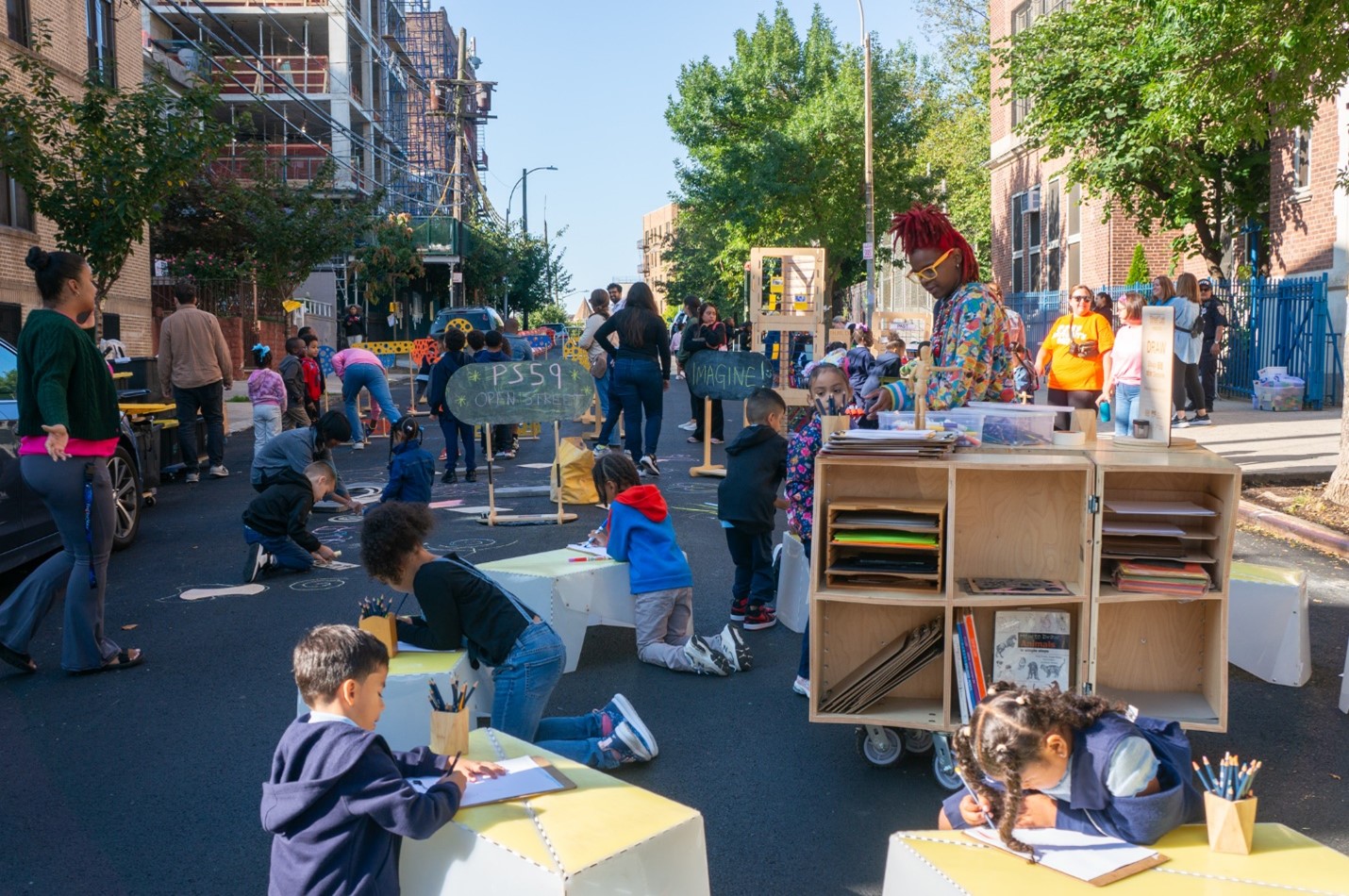
The New York City Department of Transportation (DOT) launched the Open Streets program during the COVID-19 pandemic, allowing schools to use the street in front of their building to offer safe outdoor spaces for recess, outdoor learning, lunch, and safe pick-ups and drop-offs. Even with growth, it services only a fraction of NYC's 1,700+ public schools. Dr. Michael Cassidy, a professor at Mount Sinai, is working with DOT to evaluate the health and educational effects of the program, which may support the case for future expansion.
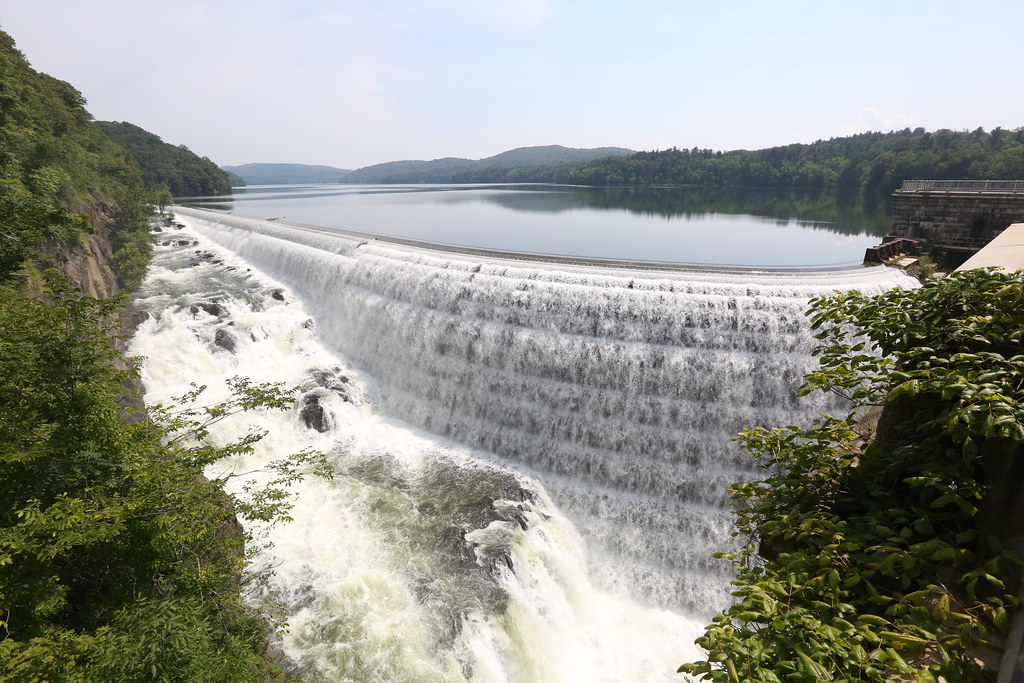
Annual springtime growth of diatom algae has impacted production efficiency in New York City’s drinking water system. Sometime in the next few years, part of the system will be shut down for repairs, making it critical that the remainder of the system operates at maximum production to meet the city’s water demand. Dr. Andrew Juhl, a professor at Columbia University, is helping the New York City Department of Environmental Protection (DEP) investigate the causes of this algal growth and define strategies to mitigate its impact.
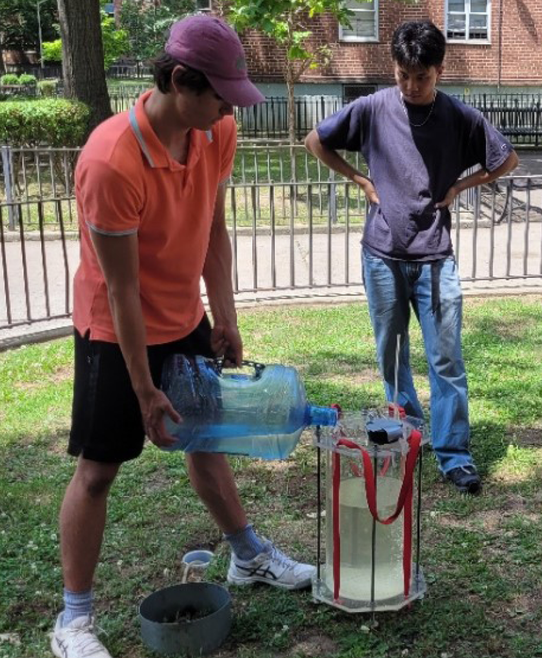
The New York City Housing Authority (NYCHA) spends significant resources raking and hauling leaves from the 1,000 acres its buildings occupy. NYCHA piloted a program to save staff time and substitute raking with leaf mulching, but it needed scientific evidence of soil health benefits to justify expansion. Dr. Joshua Cheng of Brooklyn College analyzed soil samples in the mulched vs. raked lawns, which showed that leaf mulching improved most soil health indicators. This research supported NYCHA’s case for investment, helping secure a $400,000 grant from USDA that funded additional mulchers and continued soil analysis.

The New York City Department of Youth and Community Development (DYCD) hosts a public-facing platform to help New Yorkers search for and locate its programs throughout the city. Launched in 2015, discoverDYCD is now being redesigned. A Fellow led a human-centered design process to improve how parents, youth, and community members search, evaluate, and apply to programs. The Fellow conducted surveys, focus groups, and usability tests to inform interactive prototypes for developer handoff. DYCD leadership approved the designs and internal staff capacity to implement them.

As the nation’s largest municipal public health agency, the New York City Department of Health and Mental Hygiene (DOHMH) sought to bring attention to lead-containing consumer products—like spices and cookware—identified during lead poisoning investigations. A Fellow developed a prototype platform to aggregate and visualize NYC’s open‑source data on lead-containing products. Already, 16 U.S. jurisdictions have committed to sharing their own data, launching a first‑of‑its‑kind multijurisdictional partnership. Through this, DOHMH aims to encourage corrective action in the products’ countries of origin.
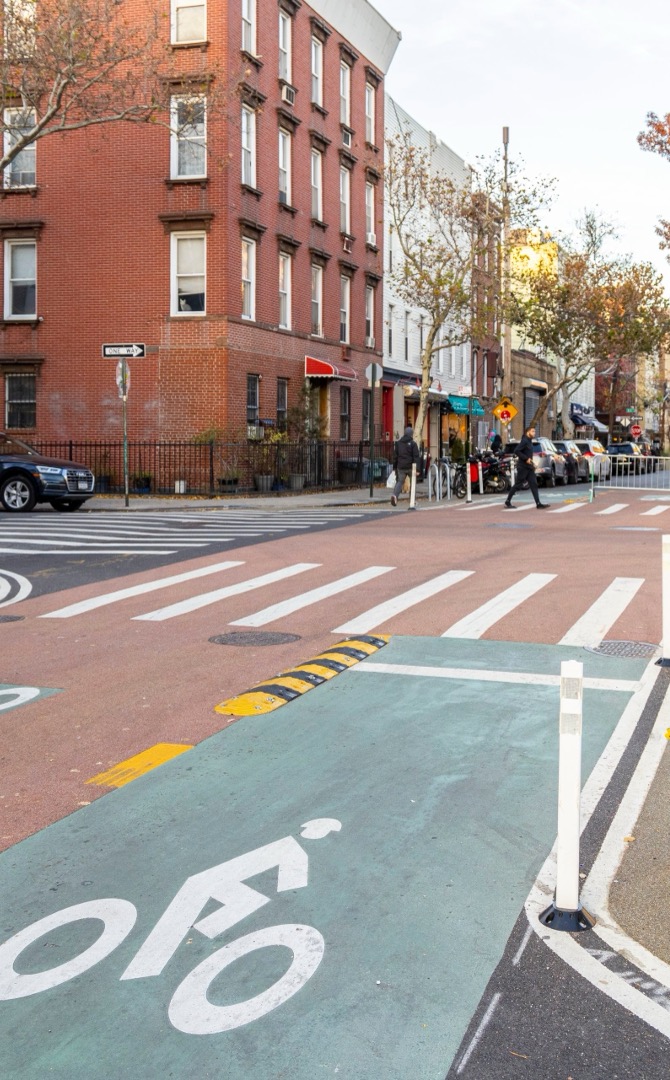
The New York City Department of Transportation (DOT) conducts regular assessments of pavement conditions utilizing a manual inspection process, but the implementation of over 250 miles of protected bike lanes has made inspection more complex, as views are blocked by parked cars or concrete barriers. Dr. Kaan Ozbay and Dr. Jingqin Gao from New York University developed and deployed a vision-based deep learning model using cameras, GPS, and accelerometers to automatically assess pavement conditions. Now DOT is exploring issuing a procurement for a commercial solution, informed by the results of this pilot.
PAST Funding recipients and affiliates





What if I have more questions?

If you still have questions about Pitchfest: New York City, please contact us at info@pilot.city. More information about the Pilot City program and our Pitchfest events can be found on our home page.
Keep Up to Date with Pilot City
Sign up to follow Pilot City. We plan to email once per quarter—and only if we have something real to say.
CONTACT US
info@pilot.city
Pilot City: A program of